 Diastra
 Diastra vs WHOOP, which suits a runner with an Apple Watch?
WHOOP suits someone who wants a screen-free strap worn day and night that scores recovery, strain and sleep. Diastra suits a runner with an Apple Watch who wants a weekly plan in heart rate bands drawn from their own max and wants to see whether their training is working.
On this page
How are WHOOP and Diastra different?
WHOOP is a wearable and a membership. You wear its strap day and night, and the WHOOP app turns what it records into Recovery, Strain and Sleep scores[2].
Diastra is an app for the Apple Watch you already own. It reads your workouts and trains you in heart rate bands drawn from your own max.
So the first question is hardware. A WHOOP membership comes with a WHOOP device[2]. Diastra needs no new device if you already wear an Apple Watch.
The second question is the job you want done. WHOOP tracks your sleep, strain and stress around the clock[1]. Diastra is built around your training. It plans your week in heart rate bands and holds each run inside them.
What is WHOOP?
WHOOP calls its strap "the wearable designed for lasting progress"[1]. The WHOOP 5.0 has no screen. Its sensors record your heart rate every second of the day and night. The battery lasts more than 14 days[1].
The device comes with the membership. WHOOP sells three tiers in the United States at the time of writing in October 2026[2].
- One is $199 a year and comes with the WHOOP 5.0. It includes the Recovery, Strain and Sleep scores, coaching, heart rate zones and a VO₂max reading.
- Peak is $239 a year. It adds a stress monitor and other features to everything in One.
- Life is $359 a year. It comes with a different device called the WHOOP MG and adds more features again.
WHOOP bills a new member for the whole year up front. Some members can switch to monthly billing after their first 12 months[3].
WHOOP offers a free month of Peak with a certified pre-owned WHOOP 5.0. If you buy a membership, you can cancel and send the device back within 30 days of receipt. WHOOP then refunds everything except shipping[2].
What does WHOOP do well?
- Worn day and night. The strap has no screen, and the battery lasts more than 14 days[1].
- A Recovery score each morning. WHOOP builds it from your sleep, your resting heart rate and your heart rate variability[4]. Heart rate variability is the change in time from one heartbeat to the next[10].
- A daily Strain Target. WHOOP uses your Recovery, sleep and training to suggest how much effort to take on each day. The app shows your strain climbing toward that target during an activity. It also shows the heart rate zone you are in[4].
- An AI coach. WHOOP Coach answers questions about your data and explains your workouts. WHOOP's Daily Outlook suggests activities each morning from your strain, your recovery and the weather[5].
- Sleep coaching. The Sleep Planner works out how much sleep you need each night and suggests a bedtime. It can wake you with a vibration[6].
- Heart rate zones from heart rate reserve. WHOOP's default is five zones drawn from the gap between your resting heart rate and your max. It starts with a max from your age, refines it from your workouts and lets you type in a lab value[7].
- Strava sync. Your Strava activities sync into WHOOP, and your WHOOP workouts sync to Strava[2].
- iPhone and Android. WHOOP has an app for both phones[8][9]. The iPhone app has 4.8 stars from about 84,000 ratings on the App Store[8].
What is Diastra?
Diastra is a heart rate training app for iPhone and Apple Watch. It reads every workout your Apple Watch ever saved in Apple Health. So Diastra starts from the runs you have already done.
Diastra looks for your max heart rate in your own workouts. You can also run a guided test or type in a max you know. Diastra tells you which of the three it used.
That max sets three heart rate bands. Easy is the easiest, Threshold is harder and VO₂max is the hardest.
The Zone 2 you know from other apps is close to Diastra's Easy band. Easy starts at 60% of your max. Its top edge is set near where lactate starts to rise for the average runner. Lactate is a substance in your blood that climbs as effort gets harder. Blood tests on 165 recreational runners found that first rise at 78.9% of max for men and 83.6% for women on average[11]. Diastra ends Easy at 79% of max for men, 83% for women and 80% when sex is not given.
Those numbers are averages. The same study found that one runner's own rise can land about 16 beats a minute above or below the average line[11].
Find your heart rate zones
Type your age. Add your sex and a max you have seen if you know them. The example below is a 35-year-old.
Age 35 · max heart rate 208 − 0.7 × 35 = 184, an estimate
Your Easy band, your Zone 2111 to 146beats a minute
Your Easy band runs 16 beats higher than the common Zone 2 chart lets you go.
Max from age uses Tanaka’s formula (208 − 0.7 × age). Easy ends where blood tests find lactate starting to rise, which is higher for women than for men. What you type stays on this page.
Diastra reads your max from your own Apple Watch workouts or a guided test and draws your bands from it.
Start my free trialYour weekly plan is built from those bands and from the minutes you already train. When you miss a day, your week is redrawn around the workouts you did. When your recovery signals are down, your hard session moves and the day stays easy.
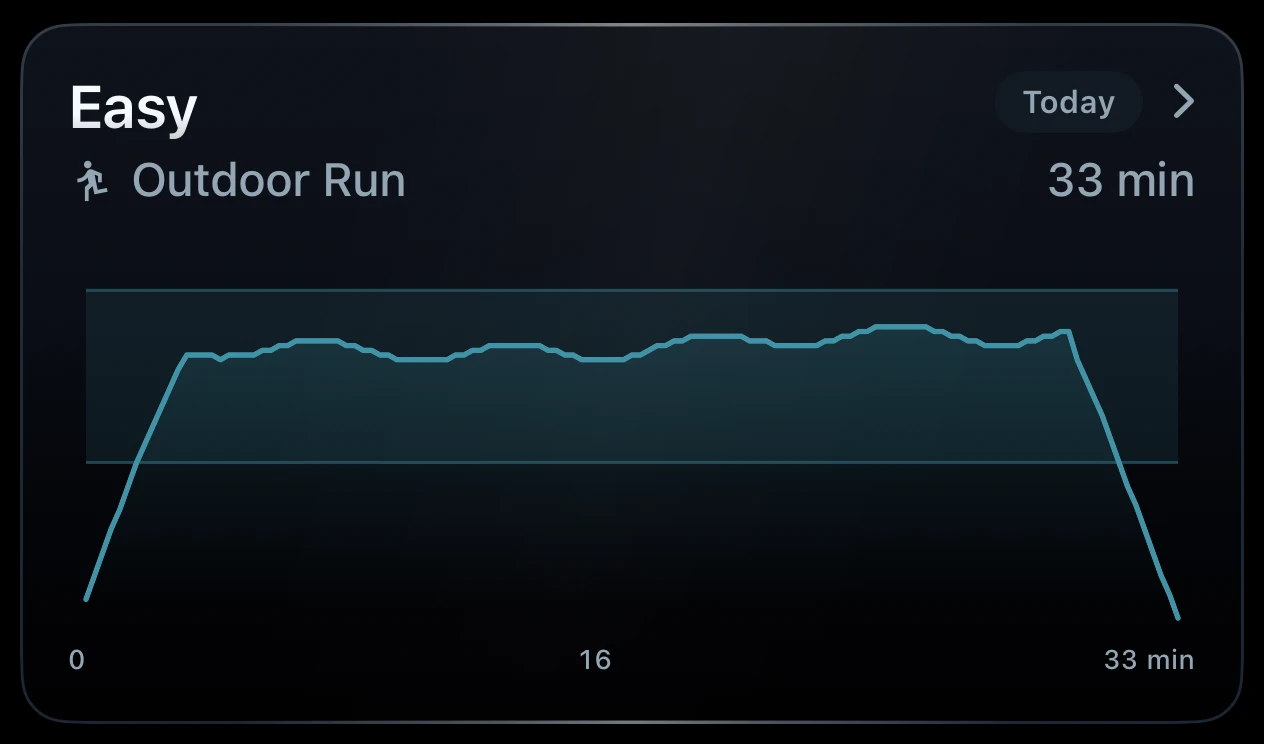
Your Apple Watch taps your wrist when you drift out of your band on a run. Only the minutes that held inside the band are credited to your week.
Diastra shows whether you are getting fitter, holding steady or slipping over the weeks. It tells you if your training is working, even when the answer is no.
You do not need an account.
Diastra has limits. It needs an Apple Watch and an iPhone. It has no sleep planner and no all-day strain score.
WHOOP and Diastra side by side
The prices below are the ones listed in the United States on October 4, 2026. Prices change, so check each site before you buy.
| WHOOP | Diastra | |
|---|---|---|
| Hardware | A WHOOP 5.0 with One or Peak and a WHOOP MG with Life, all included in the membership[2] | Nothing new. The Apple Watch and iPhone you already own |
| Price at the time of writing | $199, $239 or $359 a year by tier, billed once a year[2][3] | $119 a year or $19.99 a month |
| Free trial | One month of Peak with a certified pre-owned WHOOP 5.0[2] | 7 days |
| Phones | iPhone and Android[8][9] | iPhone |
| What it scores | Recovery, Strain and Sleep[2] | The minutes each workout held in each band, and whether you are getting fitter, holding steady or slipping over the weeks |
| Training plan | A daily Strain Target from your Recovery, sleep and training[4], plus activities suggested each morning in the Daily Outlook[5] | A weekly plan in Easy, Threshold and VO₂max that is redrawn around the workouts you did |
| Heart rate bands | Five zones from heart rate reserve by default[7] | Easy, Threshold and VO₂max from your own max, with Easy's top edge set by sex |
| During a run | Your heart rate zone and your strain climbing toward the day's target[4] | A tap on the Apple Watch when you drift out of your band |
| Account | A WHOOP membership | Not needed |
Recovery score or heart rate bands, which do you need?
A Recovery score answers a morning question. It tells you how ready your body looks for effort today. WHOOP builds that answer from your night, so the strap has to stay on while you sleep[4]. Your Recovery score then helps set your Strain Target for the day[4].
Heart rate bands answer a different question. They set how hard each part of your week should be. Diastra draws Easy, Threshold and VO₂max from your own max. Each week of your plan has minutes in each band, and the Apple Watch taps you back into the band during a run.
Both tools track which zone your heart rate is in during a workout[4]. What each one does next is different. WHOOP adds up your whole day's effort in one Strain score from 0 to 21[4]. Diastra credits each band only with the minutes that held inside it.
So the choice comes down to your main question. A Recovery score helps you decide how hard to go today. Heart rate bands help you keep each run at its planned effort. 80/20 running explains how runners split a week between easy and hard work.
Who should pick WHOOP?
WHOOP is the better pick if most of these sound like you.
- You want one device you wear day and night, including in bed.
- You want a sleep plan and a suggested bedtime every evening.
- You want a Recovery score each morning to help you decide how hard to go.
- You want one daily effort target for any activity you do.
- You want an AI coach you can ask about your data.
- You prefer a strap with no screen, or you use an Android phone.
Who should pick Diastra?
Diastra is the better pick if most of these sound like you.
- You already run with an Apple Watch and do not want a second device.
- You want heart rate bands drawn from a max found in your own workouts.
- You want a weekly plan and a tap on the wrist that holds you in your band.
- You want to see over the weeks whether your training is working, even when the answer is no.
- You would rather not make an account.
Diastra's yearly price is lower than any WHOOP tier at the time of writing. WHOOP's price includes the strap, and Diastra's assumes you already own an Apple Watch. Heart rate zones on Apple Watch shows what the watch gives you on its own.
Can you use WHOOP and Diastra together?
Yes, if you wear both devices. WHOOP gives you its Recovery score, Strain Target and sleep plan. Diastra draws your bands, holds you in them on the run and shows you over the weeks whether your training is working.
Diastra reads the workouts your Apple Watch saved in Apple Health. So wear the Apple Watch on the runs you want Diastra to read.
The advice from the two apps will not always match. If you use both, pick one to plan your week. Use the other one for the questions it answers best.
See your own bands from your own workouts.
Diastra reads every workout your Apple Watch saved, finds your real max heart rate and draws Easy, Threshold and VO₂max from it. Then it holds you in your band on every run and shows you over the weeks whether your training is working.
Start my free trial$119 a year, or $19.99 a month. Seven days free. For iPhone and Apple Watch.
More questions
Does Diastra need a strap or any other device?
No. Diastra uses the heart rate your Apple Watch records. It needs an iPhone and an Apple Watch, and nothing else.
How do WHOOP and Diastra prices compare?
WHOOP's three tiers are $199, $239 and $359 a year in the United States at the time of writing in October 2026. Each one includes a WHOOP device[2]. WHOOP bills a new member for the whole year up front[3]. Diastra is $119 a year or $19.99 a month. It does not include a watch, and it works with the Apple Watch you already own.
Does WHOOP find my max heart rate?
Yes. WHOOP starts with a max estimated from your age and refines it from the workouts it sees. You can also type in a max from a lab test[7]. Diastra also looks for your max in your own workouts, and it tells you whether the max came from a workout, a guided test or a number you typed.
Can Diastra replace WHOOP's sleep coaching?
No. WHOOP's Sleep Planner works out how much sleep you need, suggests a bedtime and wakes you with a vibration[6]. Diastra does not plan your sleep or suggest a bedtime.
Sources
- WHOOP. Home page. whoop.com, read 2026-10-04.The WHOOP 5.0 has no screen, its heart rate sensors record every second around the clock, its battery lasts more than 14 days, and WHOOP tracks sleep, strain and stress all day and night.
- WHOOP. Membership. whoop.com, read 2026-10-04.One at $199 a year, Peak at $239 and Life at $359, each with a device and coaching, Strava sync both ways, a one-month Peak trial with a certified pre-owned WHOOP 5.0, and a 30-day return.
- WHOOP Support. Billing renewal cycle and timeline. April 23, 2026, read 2026-10-04.WHOOP bills members once a year for the full year, and monthly billing is offered only to some members who have finished their first 12 months.
- WHOOP. WHOOP Strain Target, how it works and what it means. The Locker, read 2026-10-04.A daily effort target on a 0 to 21 Strain scale from your Recovery, sleep and training, with live strain and heart rate zone during an activity, where the morning Recovery score uses sleep, heart rate variability and resting heart rate.
- WHOOP Support. How to use the AI-powered WHOOP Coach. September 18, 2026, read 2026-10-04.WHOOP Coach answers questions about your data and explains your workouts, and its Daily Outlook suggests activities each morning from your strain, recovery and the weather.
- WHOOP. How much sleep do you need, Sleep Planner by WHOOP. The Locker, February 12, 2026, read 2026-10-04.Works out how much sleep you need each night, suggests a bedtime and wakes you with a vibration.
- WHOOP. Why WHOOP uses heart rate reserve, not max heart rate. The Locker, June 25, 2026, read 2026-10-04.Five zones from heart rate reserve by default, with max estimated from age, refined from workouts and open to a typed lab value.
- WHOOP. App Store listing, United States. Apple, read 2026-10-04.The WHOOP app for iPhone, 4.8 stars from about 84,000 ratings, and it needs a WHOOP wearable.
- WHOOP. Google Play listing, United States. Google, read 2026-10-04.The WHOOP app for Android, and it needs a WHOOP wearable.
- Shaffer F, Ginsberg JP. 2017. An overview of heart rate variability metrics and norms. Front Public Health 5:258.Defines heart rate variability as the changes in the time between one heartbeat and the next.
- Nuuttila OP, Kaikkonen P, Sievänen H, Vasankari T, Kyröläinen H. 2025. The accuracy of fixed intensity anchors to estimate lactate thresholds in recreational runners. Eur J Appl Physiol 125(8):2161-2171.Blood tests on 165 recreational runners found lactate starts to rise at 78.9% of max for men and 83.6% for women on average, and one runner's own rise can land about 16 beats a minute either side of that average.