 Diastra
 Diastra vs Runna, which running app suits you?
Runna suits a runner who wants a coach-built race plan with pace targets and uses an Apple Watch, a Garmin or another watch. Diastra suits a runner with an Apple Watch who wants heart rate bands drawn from their own max and wants to see whether their training is working.
On this page
How are Runna and Diastra different?
Runna and Diastra both build running plans, and both work on Apple Watch[9]. The biggest difference is what sets the target for each run.
Runna guides your runs by pace. Its help page recommends running mainly to pace and using heart rate as a second measure[3]. Your watch shows your current pace next to your target pace[9].
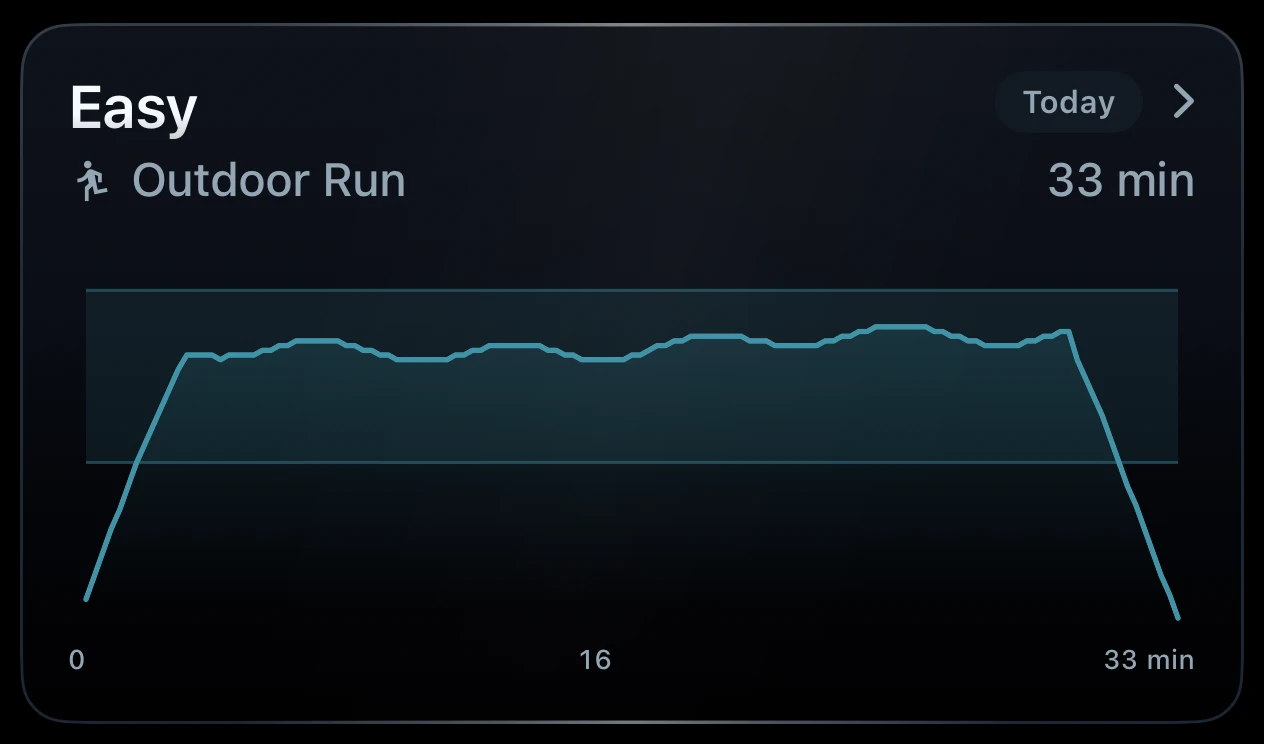
Diastra guides your runs by heart rate. It draws three heart rate bands from your own max, and your watch holds you in the band for each run.
Pace tells you how fast you are going. Heart rate tells you how hard your heart is working to go that fast. Both numbers are useful, and each app is built around one of them.
What is Runna?
Runna is a running app with training plans for races and everyday goals[1]. Strava, Inc. is the seller on its App Store page[13]. Runna says its plans are built by elite coaches[2].
The plans cover the 5K, 10K, half marathon, marathon and 50K. Other plans help you run faster, run further, start running or come back after a break[1]. You can also build a custom plan of 6 to 26 weeks for any race distance from 5 to 50 km[1].
Runna asks a few questions before it builds a race plan. It asks about your ability, your weekly distance, your longest run and any recent race times[4]. Runna builds the plan from those answers.
What does Runna do well?
- Race plans by distance. A runner with a race date picks a distance and gets a plan for every week up to race day[1].
- Pace on the wrist. Runna shows your current pace and your target pace on Apple Watch. Sounds and vibrations tell you when to speed up, slow down or rest[9].
- Many watches. Runna works with Apple Watch, Garmin, COROS, Fitbit and Suunto[1]. Runna sends workouts to a Garmin watch on its own, and finished runs come back to the plan[10].
- Paces that adjust. Pace Insights compares your intervals, tempo runs, time trials and some long runs with their pace targets. It suggests new paces when it sees a clear trend[5]. Nothing changes until you accept the new paces.
- Help when life gets in the way. Not Feeling 100% dials the plan back for 3 to 14 days. Its lightest level is no running at all[6]. Plan Realignment offers a way back after you miss more than three workouts or a week[7]. Adapt for Heat adjusts pace targets for hot, humid days[8].
- Strength and mobility. Runna adds strength sessions for the legs and core, the full body and the upper body. It also has mobility work, and the sessions come with demo videos[11].
- Community. Runna's App Store page describes the Runna Club as an international community of runners[13].
- Ratings. Runna has an Editors' Choice badge on the App Store and 4.8 stars from about 35,000 ratings[13].
Runna also shows heart rate in five zones. The zones start from a max of 220 minus your age, and you can edit them[3].
What is Diastra?
Diastra is a heart rate training app for iPhone and Apple Watch. It reads every workout your Apple Watch ever saved in Apple Health. So Diastra starts from the runs you have already done.
Diastra looks for your max heart rate in your own workouts. You can also run a guided test or type in a max you know. Diastra tells you which of the three it used.
That max sets three heart rate bands. Easy is the easiest, Threshold is harder and VO₂max is the hardest.
The Zone 2 you know from other apps is close to Diastra's Easy band. Easy starts at 60% of your max. Its top edge is set near where lactate starts to rise for the average runner. Lactate is a substance in your blood that climbs as effort gets harder. Blood tests on 165 recreational runners found that first rise at 78.9% of max for men and 83.6% for women on average[15]. Diastra ends Easy at 79% of max for men, 83% for women and 80% when sex is not given.
Those numbers are averages. The same study found that one runner's own rise can land about 16 beats a minute above or below the average line[15].
Find your heart rate zones
Type your age. Add your sex and a max you have seen if you know them. The example below is a 35-year-old.
Age 35 · max heart rate 208 − 0.7 × 35 = 184, an estimate
Your Easy band, your Zone 2111 to 146beats a minute
Your Easy band runs 16 beats higher than the common Zone 2 chart lets you go.
Max from age uses Tanaka’s formula (208 − 0.7 × age). Easy ends where blood tests find lactate starting to rise, which is higher for women than for men. What you type stays on this page.
Diastra reads your max from your own Apple Watch workouts or a guided test and draws your bands from it.
Start my free trialYour weekly plan is built from those bands and from the minutes you already run. When you miss a day, your week is redrawn around the workouts you did. When your recovery signals are down, your hard session moves and the day stays easy.
Your Apple Watch taps your wrist when you drift out of your band on a run. Only the minutes that held inside the band are credited to your week.
Diastra shows whether you are getting fitter, holding steady or slipping over the weeks. It tells you if your training is working, even when the answer is no.
You do not need an account.
Diastra has limits. It does not set pace targets from a goal time, and it does not predict a race time. It runs only on iPhone and Apple Watch. It has no strength sessions and no community feed.
Runna and Diastra side by side
The prices below are the ones listed in the United States on October 4, 2026. Prices change, so check each store before you buy. Runna also sells a joint Strava and Runna plan for $149.99 a year through Strava[14].
| Runna | Diastra | |
|---|---|---|
| Price at the time of writing | $19.99 a month or $119.99 a year[2] | $19.99 a month or $119 a year |
| Free trial | 7 days[2] | 7 days |
| Phones | iPhone and Android[1] | iPhone |
| Watches | Apple Watch, Garmin, COROS, Fitbit and Suunto[1] | Apple Watch |
| What sets the workout targets | Pace first and heart rate second[3] | Heart rate bands drawn from your own max |
| Where the max heart rate comes from | 220 minus age, and you can edit the zones[3] | Your own workouts, a guided test or a number you type |
| Where the plan starts | Your answers to a few questions, such as ability, weekly distance, longest run and race times[4] | The minutes you already run in the workouts your Apple Watch saved in Apple Health |
| How the plan adapts | Suggests new paces from your runs[5], eases off when you say you are not feeling 100%[6] and offers to realign after missed workouts[7] | Redraws your week around the workouts you did and keeps the day easy when recovery signals are down |
| Shows how training is going | A Pace Status after intervals, tempo runs, time trials and some long runs[5] | Whether you are getting fitter, holding steady or slipping over the weeks |
| Strength and mobility | Yes[11] | No |
| Account | Needed, with an email, Apple, Google or Strava[12] | Not needed |
Pace or heart rate, which should guide your runs?
A race goal is a time on a clock. In a pace plan, each workout has a target speed that leads to the finish time you want.
Heart rate shows how hard your heart is working right now. Heat and humidity push heart rate higher[3]. So you reach the top of a heart rate band at a slower pace on a hot day.
Easy runs show this most clearly. An Easy band gives every easy run the same heart rate line to stay under. The pace it takes to stay under that line can change from day to day. Zone 2 heart rate explains where the Easy band ends and the research behind it.
The max heart rate under the bands matters too. A max from 220 minus age is a guess from your age alone. A Norwegian study tested the max of 3,320 healthy adults. Even the study's own age formula missed a typical person's max by about 11 beats a minute[16]. Max heart rate formulas shows where 220 minus age came from and how far it can miss.
Who should pick Runna?
Runna is the better pick if most of these sound like you.
- You have a race on the calendar and a finish time in mind.
- You like to run to pace targets that lead to a finish time.
- You train with a Garmin, COROS, Fitbit or Suunto watch, or you use an Android phone.
- You want strength and mobility sessions inside the same plan.
- You like the idea of a community of runners training alongside you.
Who should pick Diastra?
Diastra is the better pick if most of these sound like you.
- You run with an Apple Watch and an iPhone.
- You want heart rate bands drawn from a max found in your own workouts.
- You want a tap on the wrist when your easy runs drift out of the Easy band.
- You want to see over the weeks whether your training is working, even when the answer is no.
- You would rather not make an account.
Heart rate zones on Apple Watch shows what the watch gives you on its own.
Can you use Runna and Diastra together?
Yes. Runna saves the runs you record on Apple Watch to Apple Health[9]. Diastra reads every workout your Apple Watch saved in Apple Health. So a Runna run also shows up in Diastra with its minutes in each band.
The two plans will not always match. If you use both apps, pick one to plan your week. Use the other one to read your runs.
See your own bands from your own workouts.
Diastra reads every workout your Apple Watch saved, finds your real max heart rate and draws Easy, Threshold and VO₂max from it. Then it holds you in your band on every run and shows you over the weeks whether your training is working.
Start my free trial$119 a year, or $19.99 a month. Seven days free. For iPhone and Apple Watch.
More questions
Is Diastra cheaper than Runna?
The two are close. Diastra is $119 a year and Runna is $119.99 a year in the United States at the time of writing in October 2026. Both are $19.99 a month, and both start with seven days free[2]. Runna also sells a joint Strava and Runna plan through Strava for $149.99 a year[14].
Does Runna have heart rate zones?
Yes. Runna shows five heart rate zones that start from a max of 220 minus your age, and you can edit them. Its help page still recommends pace as the main measure and heart rate as the second one[3].
Does Diastra work with Garmin or Android?
No. Diastra runs on iPhone and Apple Watch, and it reads the workouts your Apple Watch saved in Apple Health. A runner who trains with a Garmin, COROS, Fitbit or Suunto watch can use Runna[1].
Will Diastra predict my race time?
No. Diastra shows whether you are getting fitter, holding steady or slipping over the weeks. It never gives a finish time for a future race.
Sources
- Runna. Home page. runna.com, read 2026-10-04.Plans from 5K to 50K and for other goals, custom plans of 6 to 26 weeks for any distance from 5 to 50 km, apps for iOS and Android, and sync with Apple Watch, Garmin, COROS, Fitbit and Suunto.
- Runna. Pricing. runna.com, read 2026-10-04.$19.99 a month or $119.99 a year with a free 7-day trial, and plans built by elite coaches.
- Runna Support. Understanding and training to heart rate. August 31, 2026, read 2026-10-04.Recommends running mainly to pace with heart rate as a second measure, draws five zones from 220 minus age that you can edit, and lists heat and humidity among the things that push heart rate higher.
- Runna Support. How does Runna build your training plan around your current fitness? August 31, 2026, read 2026-10-04.A race plan starts from your answers about ability, weekly distance, longest run and recent race times.
- Runna Support. What are Pace Insights and how do they work? August 31, 2026, read 2026-10-04.Compares intervals, tempo runs, time trials and some long runs with their pace targets, gives a Pace Status after each one, and suggests new paces that change the plan only when you accept them.
- Runna Support. How to use Not Feeling 100%. August 31, 2026, read 2026-10-04.Dials the plan back for 3 to 14 days, from easier sessions down to no running at all.
- Runna Support. How to use the Plan Realignment feature. Read 2026-10-04.Offers ways back into the plan after more than three missed workouts or a missed week.
- Runna. Runna announces new updates further supporting year-round training, including Adapt for Heat. Press release, July 29, 2026, read 2026-10-04.Adapt for Heat adjusts pace targets for hot and humid conditions.
- Runna. Apple Watch integration. runna.com, read 2026-10-04.Shows current and target pace with audio cues and vibrations, and saves finished runs to Runna and Apple Health.
- Runna. Garmin integration. runna.com, read 2026-10-04.Sends workouts to the Garmin watch and syncs finished runs back to the plan.
- Runna. Strength training for runners. runna.com, read 2026-10-04.Legs and core, full body and upper body sessions, plus mobility work with demo videos.
- Runna Support. Signing up or logging in to Runna. August 31, 2026, read 2026-10-04.You sign up with an email, Strava, Apple or Google.
- Runna, Running Plans and Coach. App Store listing, United States, read 2026-10-04.Sold by Strava, Inc., Editors' Choice, 4.8 stars from about 35,000 ratings, and the Runna Club community.
- Runna Support. Strava and Runna subscription guide. September 4, 2026, read 2026-10-04.A joint yearly plan at $149.99 in the United States, sold through Strava.
- Nuuttila OP, Kaikkonen P, Sievänen H, Vasankari T, Kyröläinen H. 2025. The accuracy of fixed intensity anchors to estimate lactate thresholds in recreational runners. Eur J Appl Physiol 125(8):2161-2171.Blood tests on 165 recreational runners found lactate starts to rise at 78.9% of max for men and 83.6% for women on average, and one runner's own rise can land about 16 beats a minute either side of that average.
- Nes BM, Janszky I, Wisløff U, Støylen A, Karlsen T. 2013. Age-predicted maximal heart rate in healthy subjects: The HUNT fitness study. Scand J Med Sci Sports 23(6):697-704.Max tests on 3,320 healthy adults fit an age line of 211 minus 0.64 times age, with a typical miss of 10.8 beats a minute for one person.